
The Salam Centre has two new cardiac surgeons: Ahmed and Nada’s stories
War claims direct and indirect victims, destroys cities and infrastructure, and denies fundamental human rights. It interrupts dreams, disrupts life paths, and makes access to education increasingly difficult.
The conflict in Sudan has had a profound impact on the training of professionals, including those in the health sector. Studying, specialising and even imagining personal career growth becomes a daily challenge, marked by instability, fear and scarcity of resources.
We recount the impact of war on professional training through the stories of those who have experienced it first-hand: Ahmed and Nada, two new cardiac surgeons at EMERGENCY’s Salam Centre.
These are stories of people who, despite everything, have not given up on their goals: to acquire new skills and take care of their people, determined to defend the right to education and healthcare.
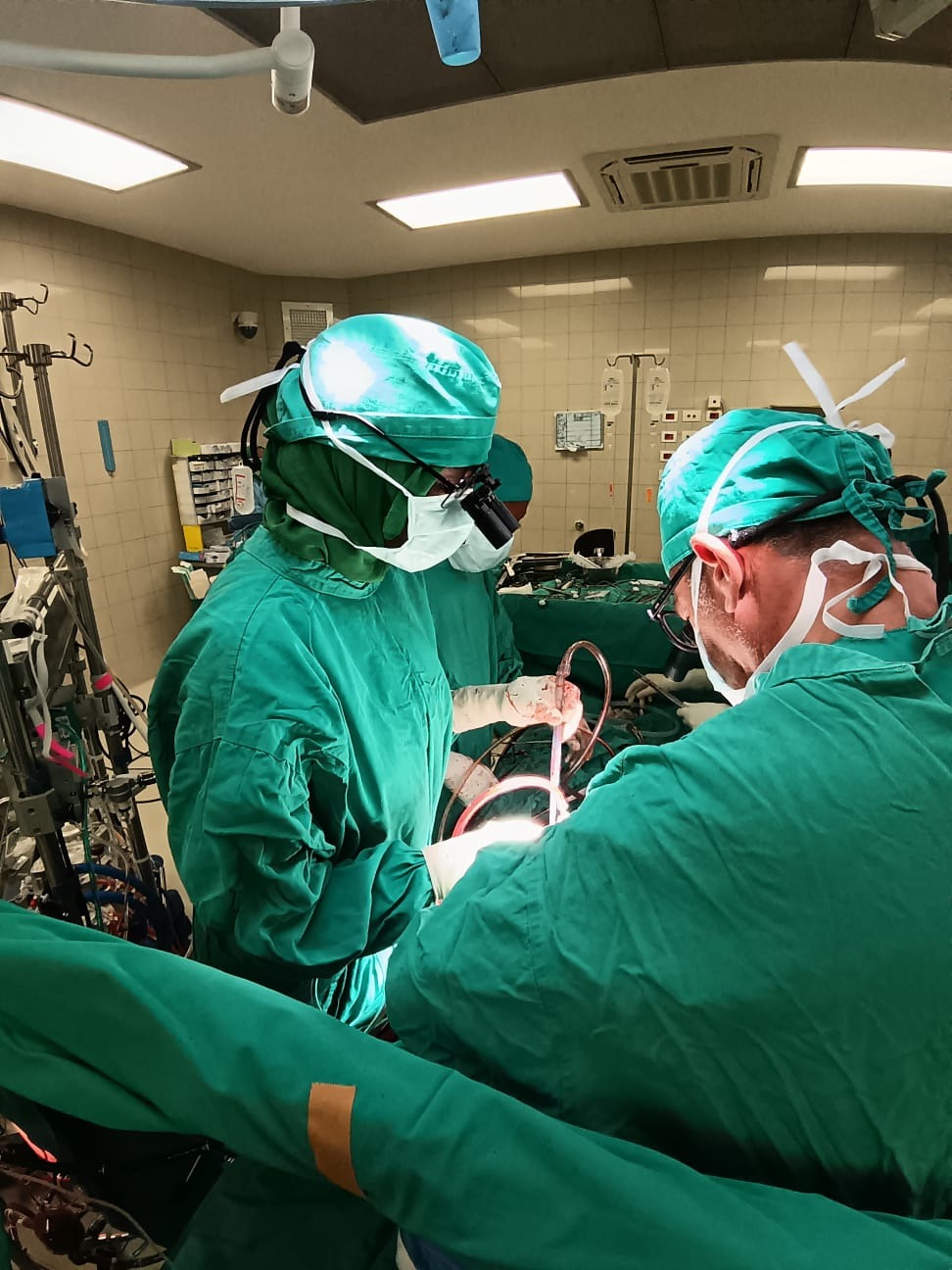
“I want to take care of Sudanese children and their weary hearts”
“I joined EMERGENCY’s cardiothoracic surgery specialisation programme in 2021,” says Ahmed Babiker Omer. “After five years of structured rotations, shadowing, continuous supervision and intermediate assessment exams, in March 2025 I returned to Salam on a permanent basis to prepare for the final exam and qualify as a senior cardiac surgeon.”
With the outbreak of war in April 2023, Ahmed and his family were forced to leave everything behind. They were among the more than 12 million people displaced in Sudan.
“I graduated in medicine from the University of El Fasher in North Darfur, now one of the areas most affected by the conflict. I was displaced from Wad Madani, and I lost everything. Without any means of communication, I had no way of contacting anyone. Some people close to me assumed I must have died.”
During his months as an IDP (Internally Displaced Person), we never lost touch with Ahmed, despite the serious communication difficulties within the country.
“I received continuous support from EMERGENCY’s national and international surgeons, anaesthetists, nurses and technicians, even during my flight to safer areas. Once I returned to Khartoum, when the troops stopped fighting in the city, my colleagues’ support was crucial. I owe a special thanks to Lino, Mohanned and Tsanko, as well as the Medical Specialisation Board – the official Sudanese body responsible for the specialist training of doctors and certifying their specialisation.”
The war has shattered the personal and professional lives of millions of young Sudanese people, fuelling the so-called ‘brain drain’ to safer regions of the country or even abroad.
“As internally displaced people, my family and I have seen death many times. The war took my father away from me. For long periods of time, we were left without the ability communicate and the challenges were extreme. But all this has strengthened my resilience and sense of responsibility towards my country, igniting a flame of hope that I know will not be extinguished.”
Those who have chosen to stay, like Ahmed, continue to make EMERGENCY’s vision a reality: strengthening the local medical profession as an essential element in building sustainable healthcare systems capable of meeting future challenges.
“My goal is to take care of children and their weary hearts: weary from illness, war and poverty. Over the years, I have seen the transformative impact that free, high-quality care, such as that offered by the Salam Centre, can have on people’s lives.”
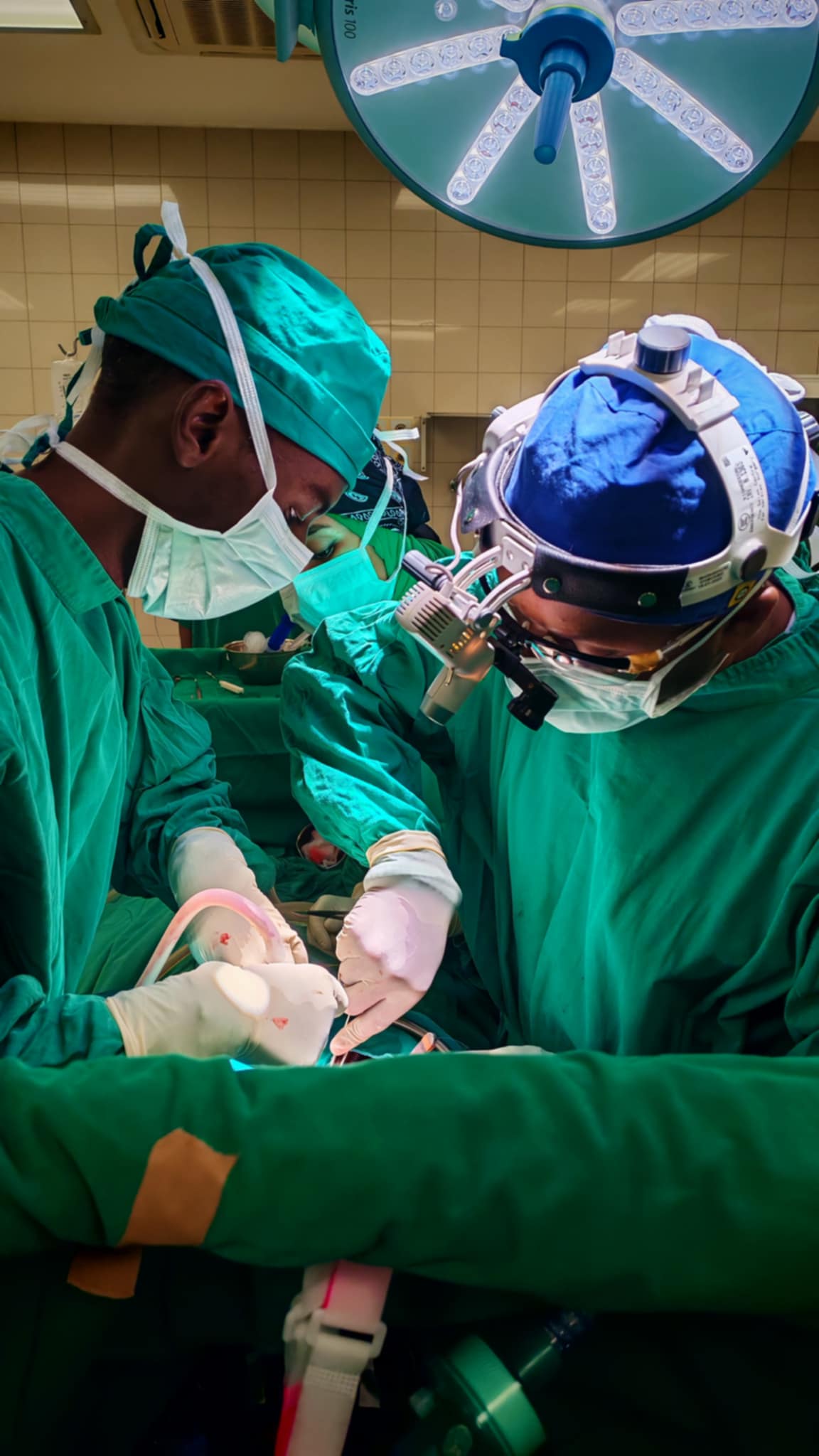
“A structured path, with progressive responsibilities”
“I decided very early on to study medicine, driven by a desire to help the most vulnerable communities and make a real difference, especially in areas with limited access to specialist care.”
Nada Faisal Hassan Mansour is the second Sudanese specialist to graduate from the Salam Centre since the start of the war – and the first female cardiac surgeon ever certified by the Sudan Medical Specialisation Board. She comes from Nyala, in South Darfur, which remains deeply affected by the conflict.
“I was admitted to the cardiothoracic surgery specialisation programme in 2017, after graduating from the University of El Fasher.
“Through these years of conflict, communication became extremely difficult. At one point, I completely lost contact with my family, particularly during the attack on Nyala. We were living near the EMERGENCY Paediatric Centre in the city, which was also affected during the attack, and my family was displaced as a result of the violence. It was a very difficult and distressing period of time, but I remained committed to my training and professional responsibilities.”
The training programme at EMERGENCY’s hospitals includes a theoretical part — with written, clinical and oral mid-term and final examinations — and a practical part, based on the principles of continuous education and training.
“After four years in the specialisation programme, I joined the Salam Centre in 2020 as a rotating Cardiothoracic Surgeon. I returned in December 2022 and continued working there throughout the war.
“My training at the Salam Centre was a structured programme with progressive clinical and surgical responsibilities and constant supervision by EMERGENCY staff. I successfully completed my final examination and qualified as a specialist Cardiothoracic Surgeon. I sincerely thank Dr Lino, Dr Mohanned, Dr Gina and Dr Elena for their invaluable support. I am also deeply grateful to all my teachers, the Specialisation Board, and my family for their guidance, trust and constant encouragement throughout my training.”
The war interrupted Nada’s training, her ability to communicate and her personal stability, but it also accelerated her professional growth, strengthening her ability to adapt and her determination to achieve a goal that was important both for her and for her country.
“Achieving this milestone as the first Sudanese female cardiothoracic surgeon ever to be certified by the Sudan Medical Specialisation Board is a source of deep pride and humility for me. It represents perseverance, hope and commitment to my patients and my country at a time of enormous difficulty. By maintaining high professional standards, in line with EMERGENCY’s mission to provide free, high-quality care, professionals like me can help rebuild confidence in and the capacity of the Sudanese healthcare system.”
In a deeply complex context compromised by war, training becomes an act of human and collective resistance: continuing to learn so that the conflict does not determine who you can become. It is an affirmation of life, dignity and the future, even when everything around you is moving in the opposite direction.
“Continuing to work during the war has been extremely complicated, but also very meaningful. After specialisation, my goal is to continue my training with an advanced course that will allow me to further refine my surgical skills.”
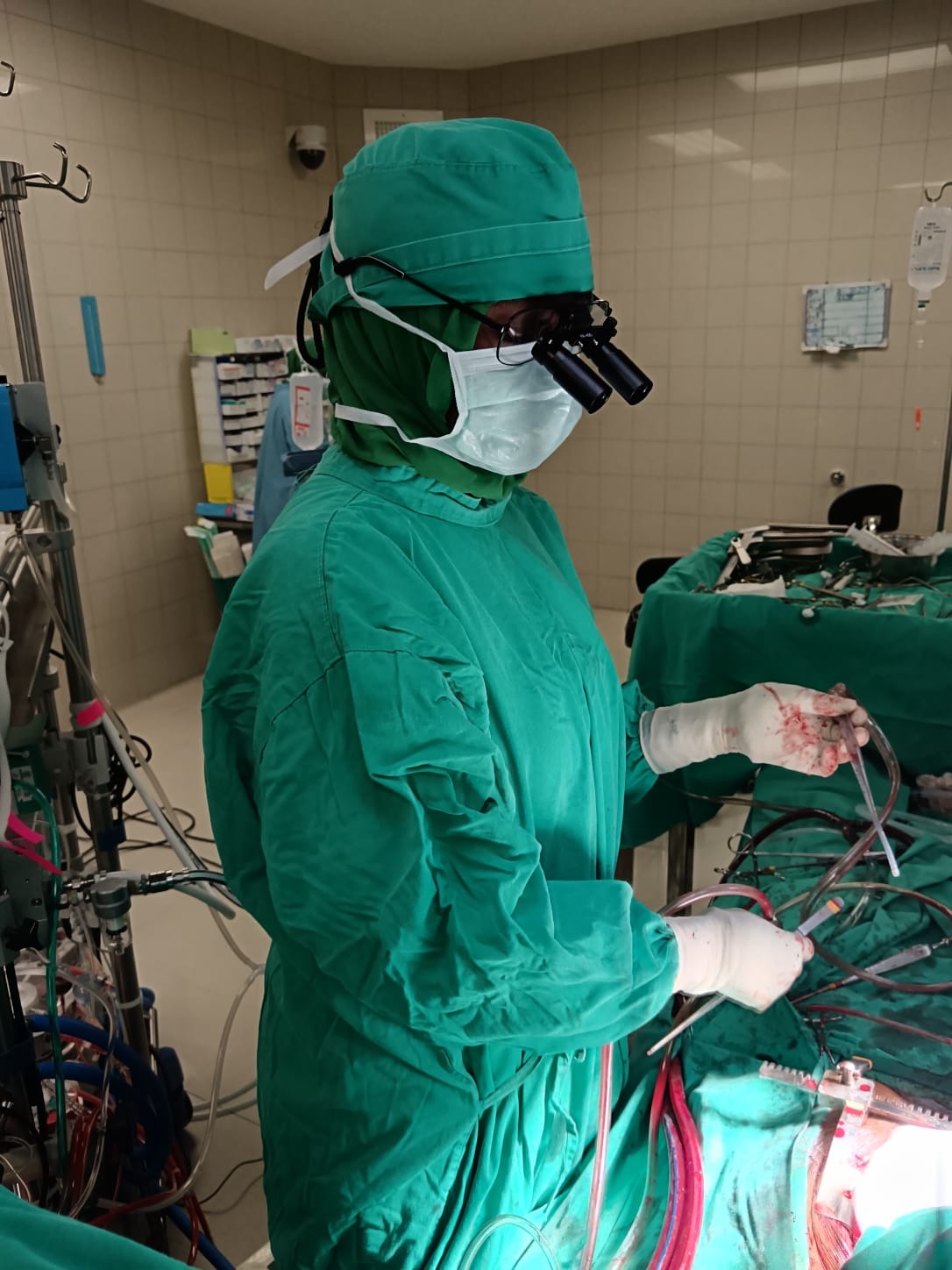
How training takes place in an EMERGENCY hospital
Training local staff has always been a fundamental pillar of EMERGENCY’s humanitarian projects: an investment in sustainability and the future, based on sharing high-level skills to ensure excellent care and train professionals capable of strengthening the healthcare systems of the countries in which it operates.
In an EMERGENCY hospital, the training cycle is designed as a structured and gradual programme, which accompanies young doctors from theory to full clinical responsibility, with the quality of care and patient safety always at its core.
Residency, or the specialisation course recognised by universities and training institutes accredited with EMERGENCY, is divided into annual rotations in the various departments and services of the hospital. Each year represents a step in growth, in which skills are acquired progressively: observing, assisting, practising, gradually taking on greater clinical and surgical responsibilities.
Learning takes place in the field, alongside experienced professionals, through:
- continuous support and supervision, based on the “training on the job” model
- structured theoretical training
- interim and final exams
- constant discussion within the multidisciplinary team
This training aims not only to teach ‘how to do’, but also to build autonomy, a sense of responsibility and decision-making skills, often in complex contexts with limited resources. It is an investment in the future of the local healthcare system, because training doctors means ensuring quality care for today, and enabling a solid and sustainable healthcare system for the future.
Latest updates
Ukraine | Our refurbishment of the Husarivka Clinic in Kharkiv, through the eyes of Liudmyla and Dmytro
Thursday, September 17, 2026