
Three Years of War in Sudan
Three years on, the war continues
On 15 April 2026, the conflict in Sudan marks its third year of war. Armed clashes continue in many regions, such as Darfur and Kordofan.
Sudan has the highest number of people in the world in need of humanitarian aid. Half of them are children.
Even where fighting has ceased, the consequences continue to affect 33.7 million people across the country – accounting for more than two-thirds of the population.
- 9.3 million people are internally displaced
- 4.3 million people have sought refuge in other countries
Conflict in Sudan has driven one of the world’s the most severe humanitarian crises. EMERGENCY continues to provide care in the country — including in Khartoum, Port Sudan and Nyala (South Darfur) — witnessing a steady deterioration in the condition of patients admitted to our facilities.
"In Khartoum, which was the epicentre of the clashes ever since the outbreak of the conflict, fighting ceased when the Sudanese Armed Forces recaptured the city in March 2025. However, several areas of the city are still lacking basic services such as electricity and safe drinking water. Around 87% of healthcare facilities are completely out of service. The city centre is deserted and completely destroyed, so those wishing to return to their homes find themselves displaced nonetheless. Clashes continue in various parts of the country, leading to a steady rise in the number of IDPs. We see many of them in our hospitals."
Matteo D’Alonzo, EMERGENCY’s Country Director in Sudan
Patients are arriving at the Salam Centre for Cardiac Surgery in increasingly serious conditions
With fighting ceasing in Khartoum, the Salam Centre for Cardiac Surgery is once again receiving cardiac patients who, for a long time, were unable to reach the hospital due to the clashes; their condition on arrival is increasingly serious.
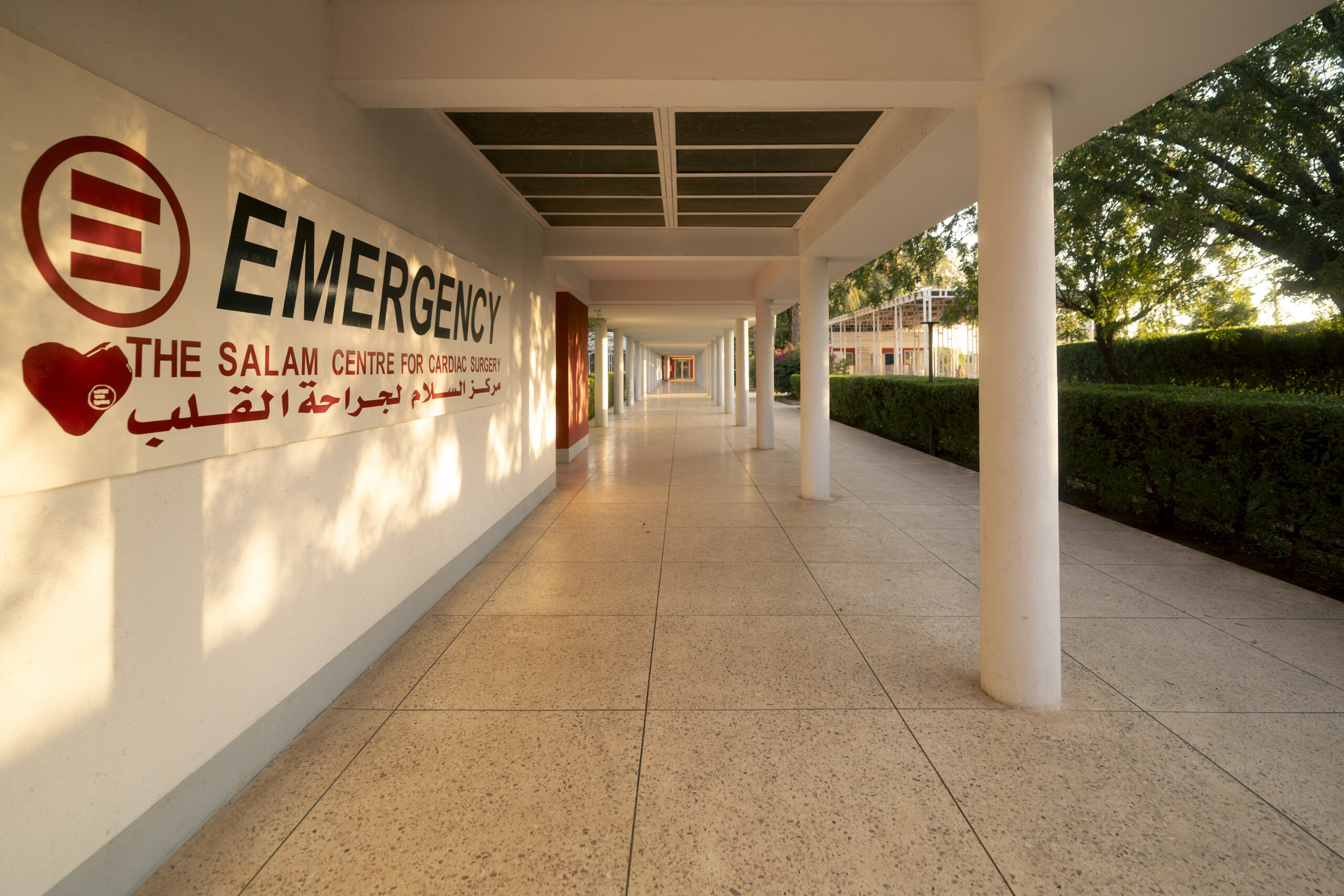
"We have patients arriving from areas of active conflict, such as Kordofan and Darfur, who take days to travel on foot and by makeshift means. In recent days, for example, a 16-year-old boy arrived in a very critical condition with mitral and aortic valve insufficiency, after a 17-day journey from Zalingei in Darfur, an area with ongoing fighting. He was admitted but his condition deteriorated, he suffered a cardiac arrest, was resuscitated and underwent emergency surgery. His post-operative recovery is going well, but it has been complicated because he is severely malnourished, weighing just 23 kg."
Elisabetta Maio, cardiac perfusionist at the Salam Centre for Cardiac Surgery
Children remain among the most-affected
- More than 5 million children have been forced to leave their homes over the past three years, subjected to attacks, violence and deprivation of basic living conditions.
- An estimated 19 million people are severely malnourished, including 4.2 million children.
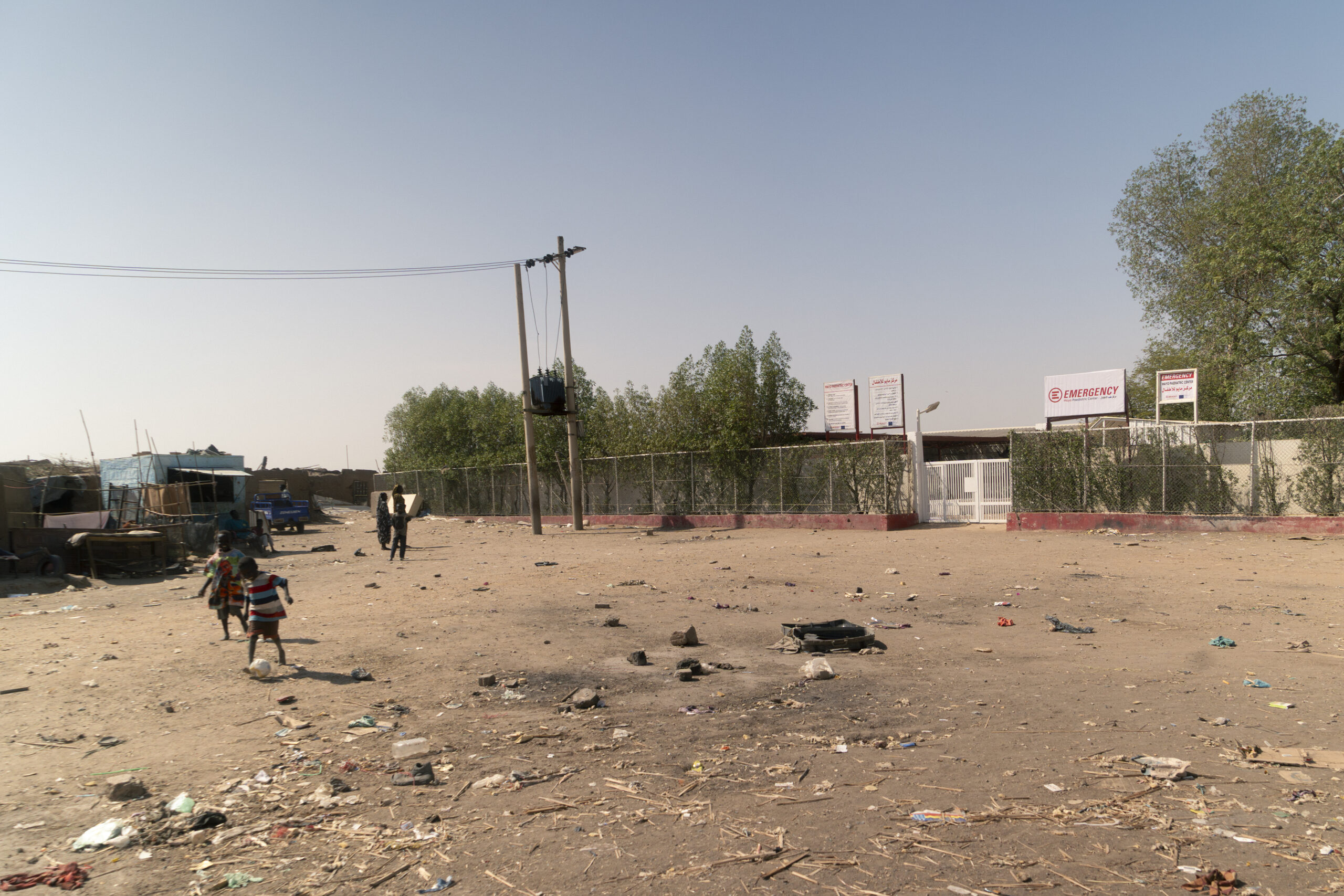
“By the end of 2025, we reopened our Paediatric Centre in the Mayo refugee camp, on the outskirts of Khartoum. We are seeing lorries full of displaced people arriving from Kordofan, and many of our patients are displaced people in serious condition. In Mayo and at the Paediatric Clinic in the Salam Centre complex, we see around 1,000 children per facility each month. 60% have severe malaria, and many suffer from diseases such as whooping cough and diphtheria. All these conditions are preventable through vaccines and preventive measures that, in a war zone, remain difficult to access. One in three children in Sudan has no vaccination coverage whatsoever.”
Laura Ena, paediatric nursing coordinator for EMERGENCY in Khartoum
The safety of civilians remains at risk
In Nyala, the capital of South Darfur and home to an EMERGENCY Paediatric Centre, attacks continue. Civilians who have been repeatedly displaced continue to embark on long and costly journeys to reach the remaining operational healthcare; we have received patients from other parts of Darfur and beyond.
Across the country, only 63% of healthcare facilities are partially operational.
“Of the 100 children we see every day, one in five is severely malnourished. Most of these children also suffer from other conditions, particularly infectious diseases such as pneumonia, in a severe stage. Many require continuous oxygen support to breathe. Living conditions for the population are precarious, with makeshift shelters often lacking adequate hygiene and access to clean water. Now, with the rainy season, there is a real risk of outbreaks of cholera and gastroenteritis, which are putting further strain on an already fragile system.”
Ljubica Ledenski, director of EMERGENCY’s Paediatric Centre in Nyala, South Darfur
The impact of war in the Gulf
Compounding the already dire situation in Sudan is the impact of the ongoing conflict in the Gulf. The closure of the Strait of Hormuz risks disrupting the supply of essential goods, foremost among them medicines.
At present, a shipment of medicines for EMERGENCY is stranded in Dubai. Even the cost of fuel, essential for powering the generators that keep our operations running in a context with often unstable electricity supplies, is rising due to closures caused by the conflict.
"We never stopped because we knew the population needed care. When the war broke out, I managed to get my family out of the country, whilst I settled in the hospital to offer my full support to the project given the dangerous situation in the city. My wife was pregnant. I didn’t see our baby until he was eight months old. We were the only functioning facility in the area, we could not leave. What I hope for my country is simple: that the war ends. So many people are suffering, even far from the combat zones. We need a return to normal life; we need peace. Above all, we must not be forgotten.”
Samir Ibrahim, EMERGENCY’s Logistician in Khartoum
“Out of the Spotlight: The War in Sudan Enters its Fourth Year”
“Out of the Spotlight,” a briefing paper published by EMERGENCY, analyses the current situation in a country now in its fourth year of war, rooted in our daily experience on the ground.
The report highlights the scale of the humanitarian emergency, chronic underfunding, difficulties in accessing aid, political fragmentation and the dramatic regional repercussions of the conflict.
A number of key priorities emerge, including:
- An immediate ceasefire;
- Safe humanitarian access;
- Flexible funding based on actual needs; and
- The central role of the Sudanese people in any path towards peace.
It remains critical to keep a spotlight on Sudan, which ranks among the world’s most severe humanitarian crises.
We cannot forget Sudan.
EMERGENCY’s Programme in Sudan
We are working in Khartoum with the Salam Centre for Cardiac Surgery, as well as an outpatient clinic and paediatric ward. Our Paediatric Centres are based in Mayo, Port Sudan and Nyala (South Darfur). We also operate a network of satellite cardiology clinics, located in Atbara, Gedaref and Kassala.
Latest updates
“It is right to be here”: Medical Coordinator Giorgio Monti on providing care in Gaza
Thursday, October 1, 2026
Ukraine | Our refurbishment of the Husarivka Clinic in Kharkiv, through the eyes of Liudmyla and Dmytro
Thursday, September 17, 2026