
Afghanistan: When medical care offers a second chance
Abdul Raziq is the father of eight children, four boys and four girls. After a serious road accident in Afghanistan’s Helmand province, he spent three months receiving treatment at EMERGENCY’s Surgical Centre in Lashkar-Gah.
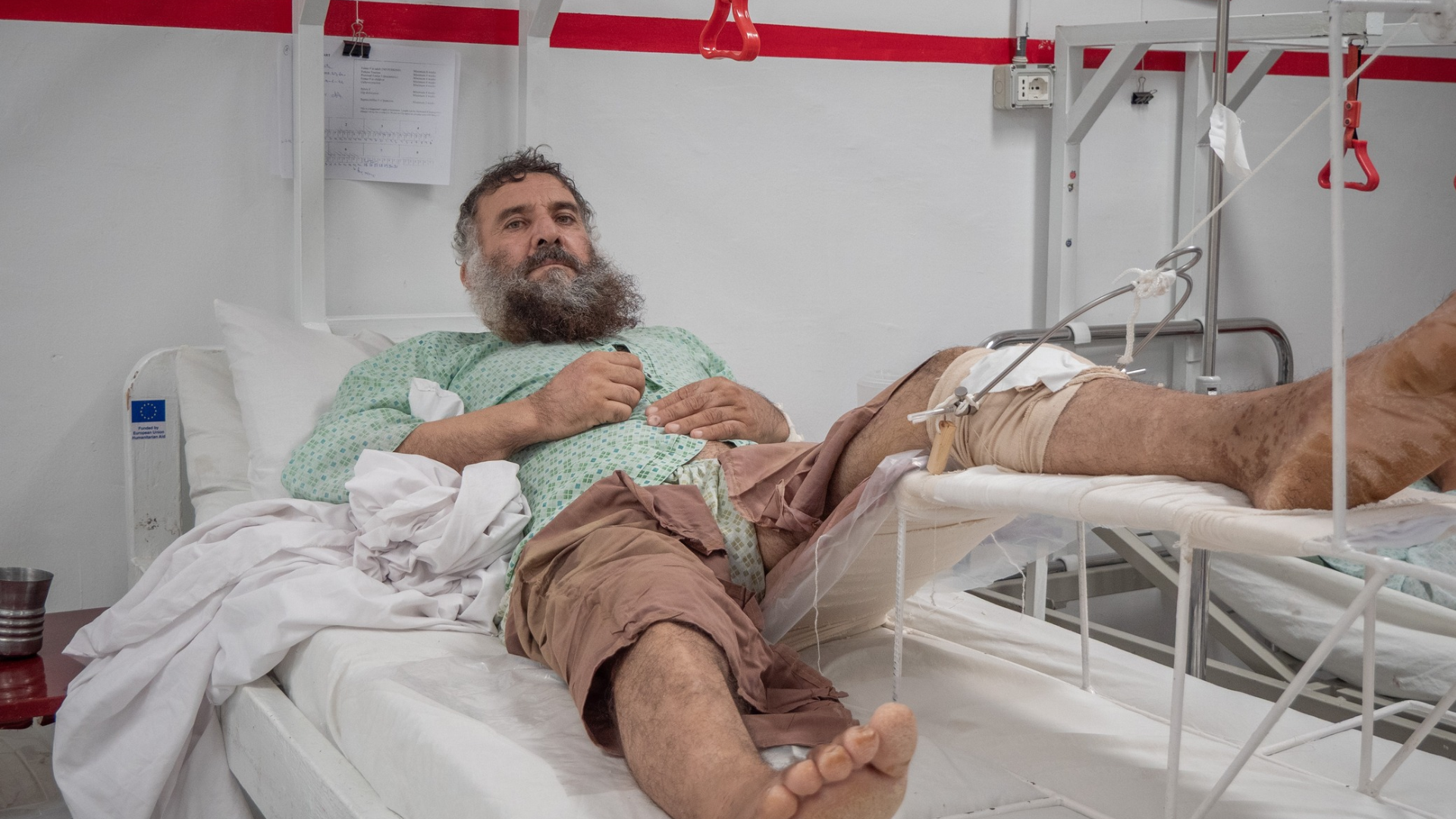
“We were on our motorbike when we collided with a car,” he recalls.
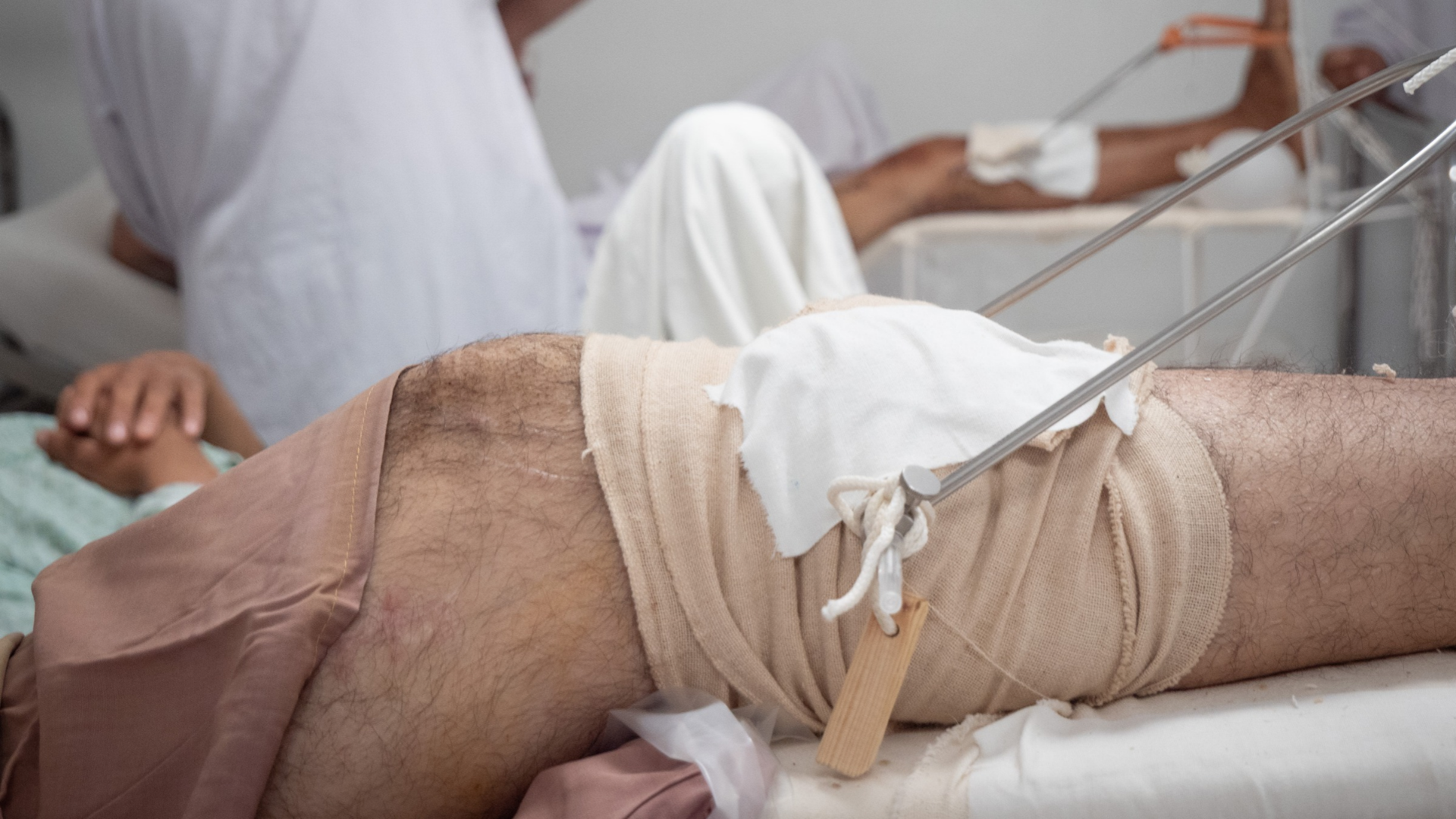
The accident left him with severe injuries, including a fracture to his left leg. His diabetes further complicated his condition, requiring careful monitoring and ongoing medical treatment.
At the Surgical Centre, Abdul received free, high-quality medical care. After three months in hospital, he is looking forward to returning home and reuniting with his family.
“I was about to die, but the hands of these people saved me."
Abdul, referring to the doctors and nurses who looked after him.
For Abdul, access to medical care has meant a second chance at life and the hope of returning to his family and his daily life.
A growing need for trauma care
In Afghanistan, road traffic accidents are a major cause of traumatic injuries, placing additional pressure on an already fragile healthcare system. Road accidents are a serious and widespread problem, while access to timely medical treatment remains particularly challenging in rural areas.
For millions of people living in poverty or far from essential services, motorbikes or other informal forms of transport are often among the only available options.
We cannot abandon Afghanistan.
EMERGENCY’s Surgical Centre in Lashkar-Gah provides free, high-quality care to people injured by violence – including from explosions, stabbings or shootings – and civilian incidents, including road traffic and domestic accidents. Opened in 2004, the Centre was the third facility EMERGENCY built to treat the victims of war in Afghanistan. Located in Helmand province, one of the areas most affected by decades of fighting, we treated tens of thousands of people injured by war between 2004 and 2021.
Today, as Afghanistan faces a worsening economic and humanitarian crisis, EMERGENCY continues to respond to evolving healthcare needs, including the growing demand for civilian trauma care
EMERGENCY’s Surgical Centre in Lashkar-Gah is co-funded by the European Union.
