
Life Support’s Third Year at Sea
The Mediterranean Sea remains one of the world’s most lethal migration corridors and the site of an unrecognised humanitarian crisis. The people attempting to cross the sea are driven by interlinked, compounding pressures: armed conflict, persecution, human rights violations, climate-related displacement, economic fragility and the desire to seek better living conditions.
In 2025, EMERGENCY’s ship Life Support continued to conduct search and rescue operations in the Central Mediterranean.
During our third year at sea, we have continued to observe and monitor the effects of persistent practices that hinder humanitarian action at sea: the use of administrative detentions under Italy’s Piantedosi Decree, and the arbitrary assignment of distant ports exclusively to NGO vessels.
Read more about our missions and the shifting operational space for the Civil Fleet in our new report, Against the Current: Three Years of Rescuing People in the Mediterranean.
“The cost of externalisation policies is the systematic violation of fundamental rights in a cycle of violence and extortion described by independent international experts as a crime against humanity. In 2025, EMERGENCY witnessed an escalation of interceptions and pushbacks carried out by Libyan patrol boats directly funded or supplied by the EU and its Member States. Search and rescue NGOs also continue to suffer deliberate attacks during rescue operations, including gunfire, threats, intimidation and verbal abuse.”
Davide Giacomino, Advocacy Officer
Details from Life Support in 2025
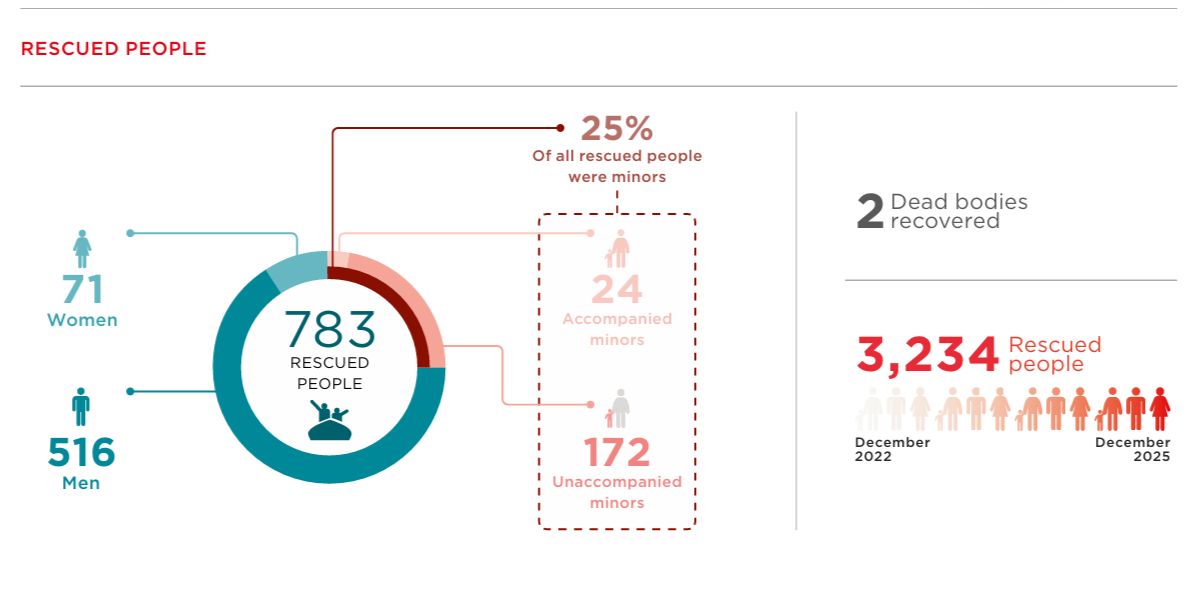
In 2025, Life Support carried out 10 search and rescue missions in the central Mediterranean, and served as an observer and support vessel to the Global Sumud Flotilla. Across the 10 missions, the crew completed 14 rescue operations, bringing 783 people to safety. Around one in four were minors.
Since the start of operations in December 2022, Life Support has rescued a total of 3,510 people (data updated to April 2026).
The impact of assigning distant ports
Throughout 2025, the practice of assigning distant ports to NGO vessels operating in the Mediterranean continued to hamper search and rescue operations, forcing already vulnerable rescued people to spend additional days at sea before disembarkation and unnecessarily delay access to essential, specialised health services.
The practice also forced Life Support to sail an extra 10,060 km, amounting to an additional 14 days at sea for the rescued people, and 28 days for the crew.
Medical care on board
Expanding access to free, high-quality medical care is central to EMERGENCY’s mission, especially for people in physically and psychologically vulnerable conditions.
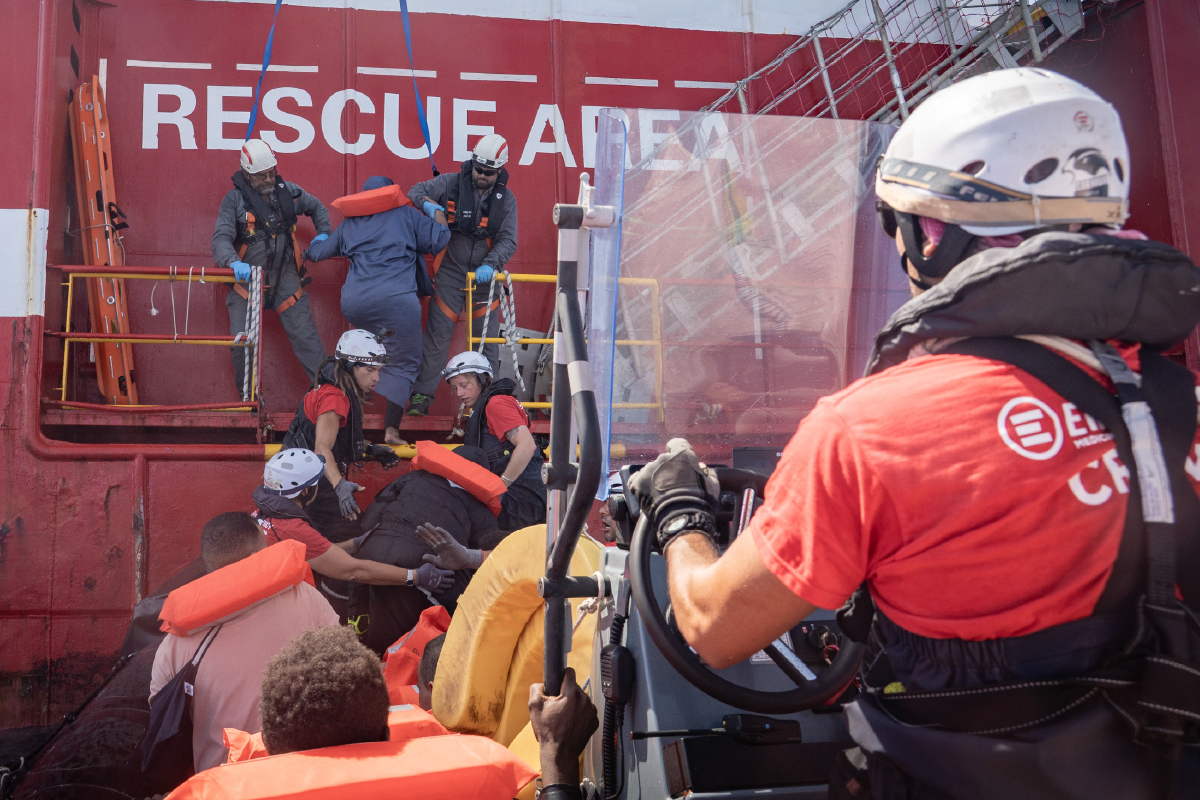
On board Life Support, a doctor and two nurses make up the dedicated medical team that provide continuous care from the moment of rescue and throughout the journey until disembarkation.
Upon boarding, all rescued individuals undergo medical triage to evaluate their clinical condition before being guided to the shelter area, where the onboard clinic is located. Over the course of 10 missions in 2025, our medical team carried out 440 clinical consultations for 270 patients, more than a third of the 783 people rescued that year.
“Assigning distant ports means subjecting survivors to unnecessarily prolonged journeys, delaying their access to essential services in line with international law. It also means removing Civil Fleet vessels from the operational area and increasing costs for NGOs. The Piantedosi Decree, together with the assignment of ports far from the operational area, has therefore taken precious time and resources away from the rescue and protection of those at sea, and has removed the only witnesses to the violations committed in the Central Mediterranean. These practices will soon be joined by a new and questionable measure: the so-called ‘transitional naval blockade’ designed by the Italian government.”
Carlo Maisano, Project Manager for Life Support
Global Sumud Flotilla
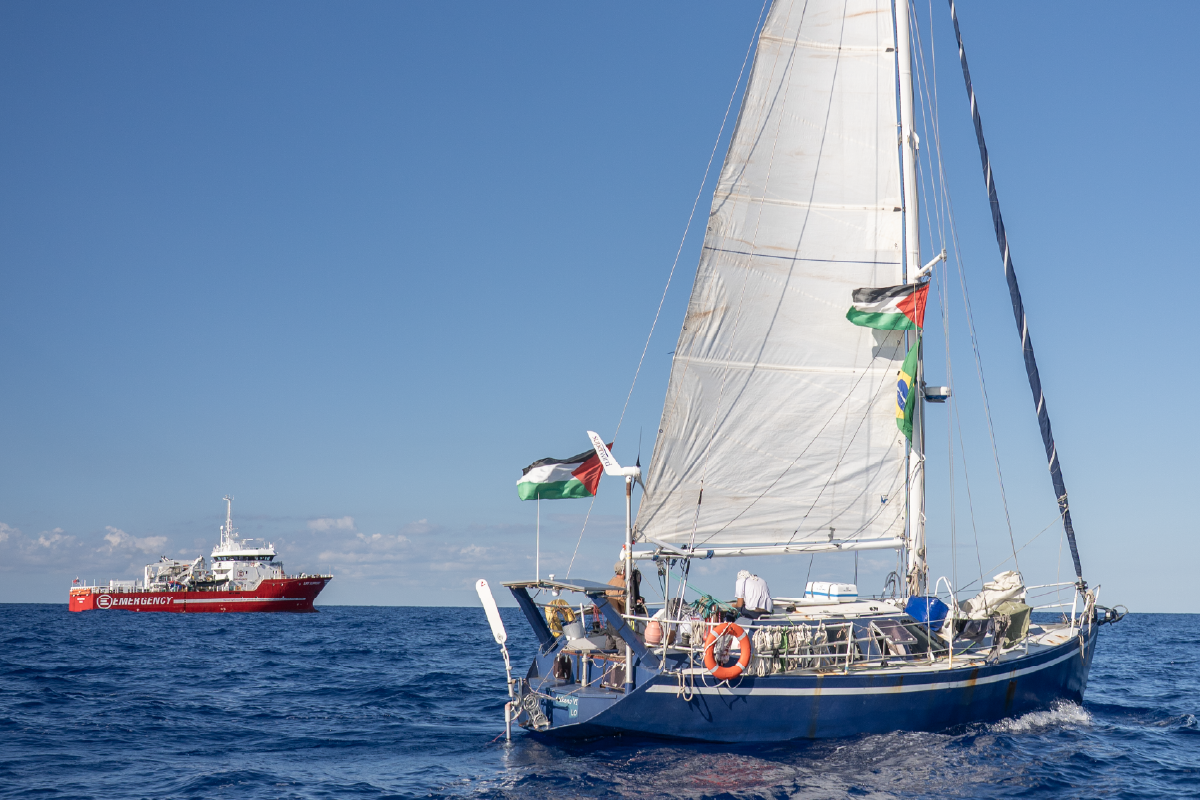
Between September and October 2025, Life Support took part as an observer and support vessel to the Global Sumud Flotilla, a non-violent maritime mission bringing together delegations from 50 countries in a collective act of international solidarity.
The Flotilla sought to reach Gaza by sea to challenge the blockade imposed on the Strip and deliver essential humanitarian aid. During the mission, Life Support provided medical, mechanical and logistical assistance to participating vessels.


We continue to call for change in Europe
The report concludes with six concrete recommendations, designed to bring about a fundamental shift in the approach to migration.
We call for a strengthening of search and rescue operations in the Mediterranean, an end to the criminalisation of people on the move and of NGOs, and a halt to policies of pushbacks and border externalisation.
The third year of Life Support
Against the Current: Three Years of Rescuing People in the Mediterranean
More Updates from Life Support
Against the Current: Three Years of Rescuing People in the Mediterranean is the third report on EMERGENCY’s activities on the central Mediterranean.
Read about our second year of search and rescue in the report An Inhumane Border, and about our first year in the report Saving Lives in the Abandoned Sea.
Follow along on our blog for more updates from each search and rescue mission.