
Snapshots of Life at EMERGENCY’s Paediatric Centre in Nyala
Sudan remains one of the worst humanitarian crises in the world
Nearly 12 million people have been displaced, more than half of whom are children. Over 3.6 million children are acutely malnourished.
After almost three years of war, Sudan continues to experience one of the worst humanitarian crises in the world.
Darfur, where over 5.5 million displaced people have taken refuge, has been devastated by violence, hunger, mass displacement and the increasingly rapid spread of disease, compounding decades of conflict, food insecurity and serious health emergencies in the region. Millions of people have lost their homes and livelihoods, while civilians – especially women and children – remain the most affected by violence, malnutrition and lack of care.
In Nyala, South Darfur, we continue to provide free healthcare to children and their mothers to ensure access to care for the increasingly vulnerable population.
[Data: OCHA, IOM, UNHCR, Food Security Information Network]
Seeds of Health
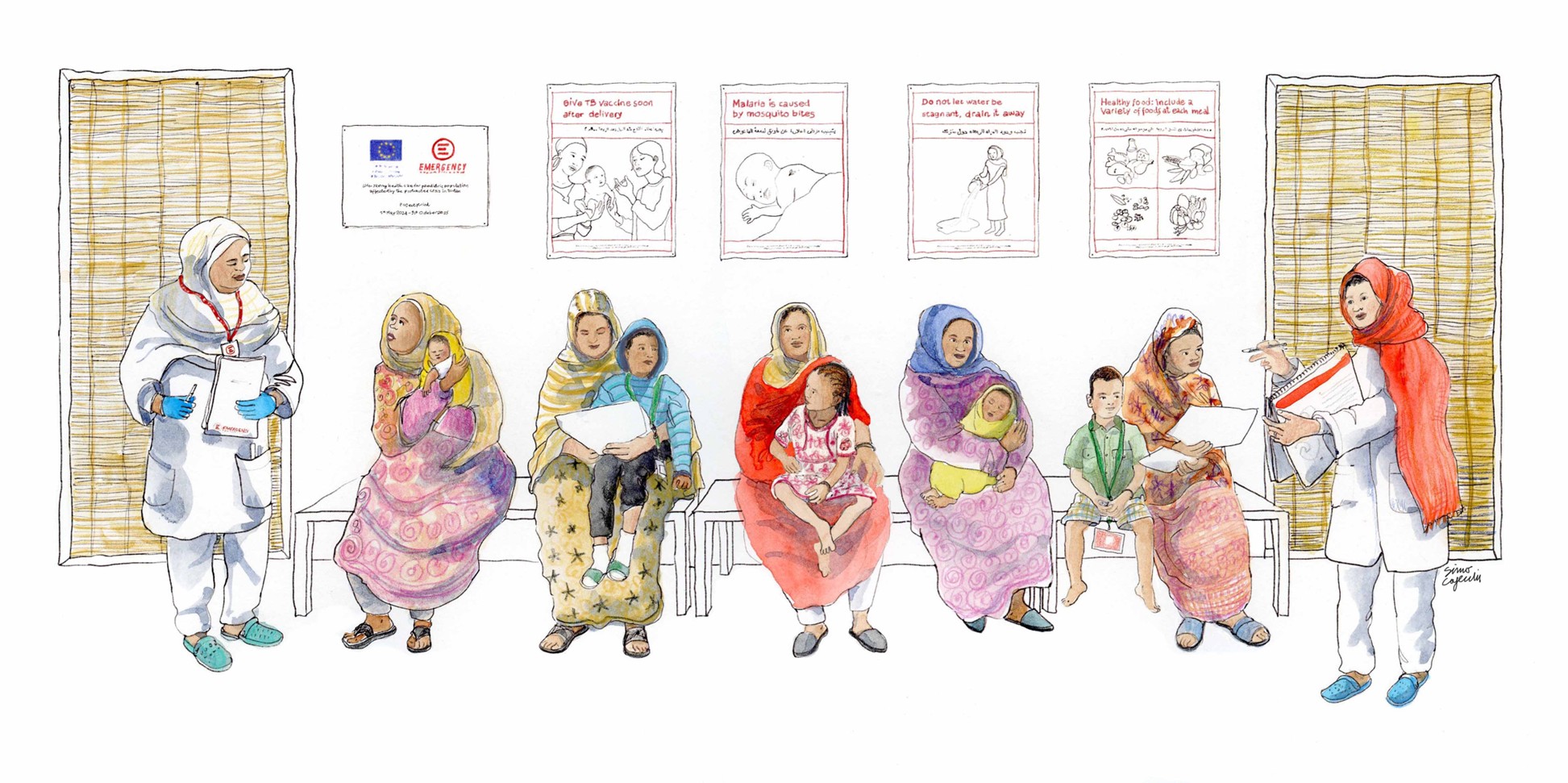
Health promotion sessions at EMERGENCY’s Paediatric Centres are immediately recognisable: a group of women, many of them carrying their babies, listen attentively to the Health Promoters who share best practices for raising a child in a complex environment.
They discuss malaria, diarrhoea, vaccinations, and the importance of safe breastfeeding and weaning. On the walls behind them, posters illustrate important moments for a mother and her child in its early years of life.
Aisha sits with little Fatah on her lap. For days, she has been unable to find food with adequate protein for her baby. What little can be found at the market is often too expensive and unsuitable for such small children, one of the many consequences of the war economy that began after conflict broke out in 2023.
During this session, Aisha learnt which ingredients available in the market can be used to prepare a protein-rich soup to improve Fatah’s nutritional status.
Gulsh, meanwhile, has asked if her child Justin’s symptoms are a consequence of malaria, and what she can do to care for him: a thick mosquito net will protect his sleeping space and he must be kept away from stagnant water. In the displacement camps where many now live, water is often contaminated by waste that cannot be safely disposed of.
During the session, Muna, EMERGENCY’s Sudanese Health Promoter, is identifying those who rely on physical media. In a country at war, having access to a phone or internet connection is often impossible, or a privilege for the few who can afford it.
Supporting mothers to raise their children means empowering them with practical tools, and paper ensures that information is clear and accessible at all times. And, an informed mother becomes a source of knowledge for other women through word-of-mouth, a powerful communication tool in one of the most remote areas of the country.
“Health is protected by these small daily gestures,” Muna says. “They grow like a tree to make shade and fruit for the whole community. Our work aims to sow the seeds of awareness, so that no child has to suffer from preventable harm.”
The Embrace of Care
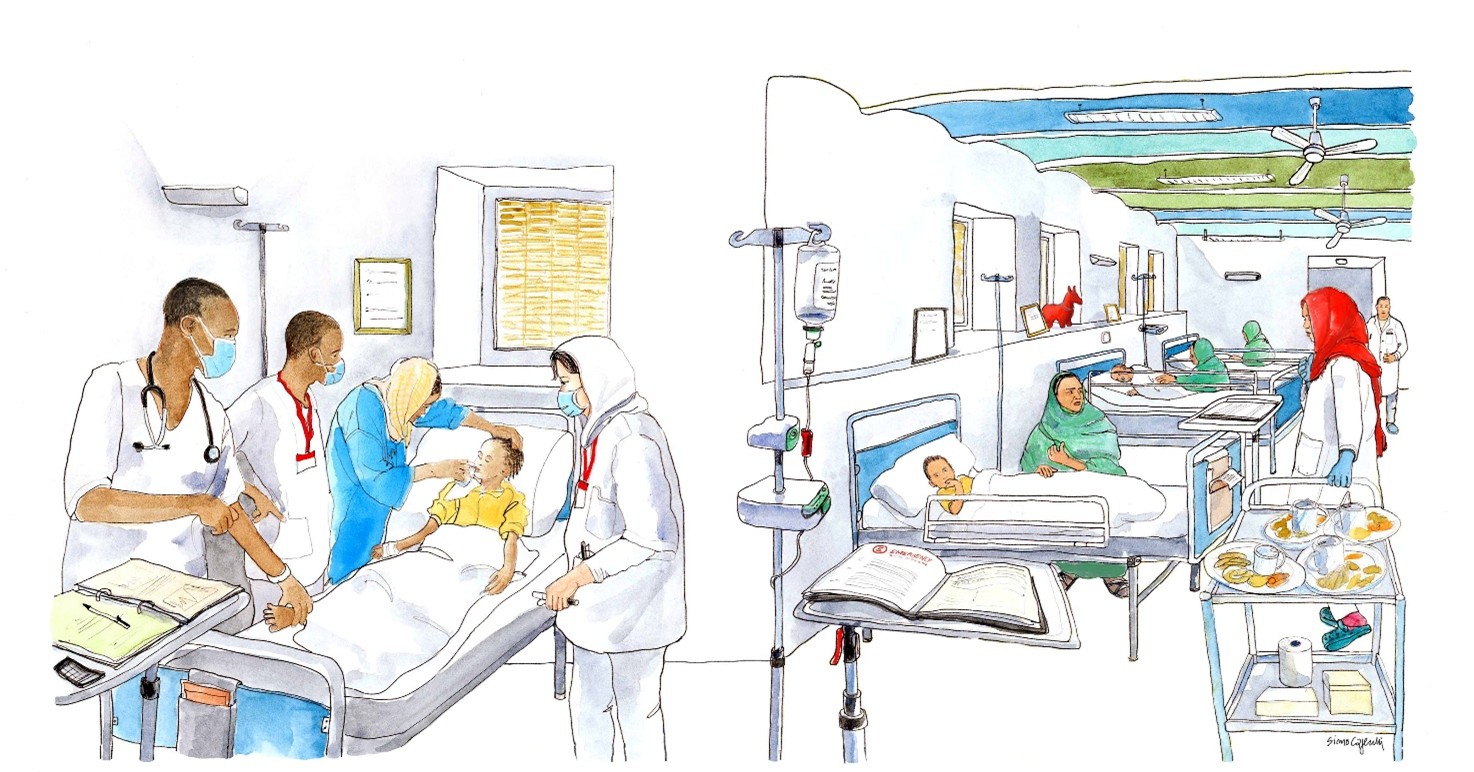
Sometimes, pyjamas are not just pyjamas.
Clean pyjamas, especially colourful ones, can transform the hospital experience from an alien and cold environment to a more familiar and comfortable space. It means thinking of the person as a human being, and not just as a number or a sick patient. It becomes a symbol of protection, comfort, dignity and care, in a safe and humane environment.
At EMERGENCY’s Paediatric Centre Nyala, each of the 16 beds on the in-patient ward supports a pyjama-clad child. At lunchtime, Daisy pushes a trolley and stops in front of Hali, a four-year-old boy who suffers from sickle cell anaemia.
The impact of the blood disorder varies across regions in Sudan, affecting 1 in 50 children in some areas, to almost 1 in 3 among some communities in western regions like Darfur and Kordofan.
Sickle cell, a blood disorder, is associated with many health problems including fatigue, pallor, abdominal, bone and joint pain, and frequent infections.
In a war-torn context like Sudan, treatment of this condition faces daily obstacles that are often difficult to overcome, as families are unable to reach health facilities in time to access prevention programmes designed to avoid the disease’s life-threatening complications.
“When we saw him in the emergency room, Hali was pale and had a yellowish complexion. He was crying non-stop, his breathing was laboured, his heartbeat accelerated. For days, he had completely lost his appetite.
“His mother no longer knew how to calm him down. He was alternating between fits and moments of lethargy. With anaemia, the brain and muscles receive less oxygen and the children spend many hours of the day in an increasingly worrying lethargic state,” explains Salim, EMERGENCY’s Sudanese paediatrician.
We put him on an urgent blood transfusion treatment plan to restore his blood balance. The Centre has its own blood bank, where we manage and process the blood donated by the local community. Hali, suffering from chronic anaemia, will need lifelong drug therapies and follow-up care, which he can receive here until he is 14 years old, along with free medication from the Centre’s pharmacy.
‘Pyjamas are not just pyjamas’: together with beautiful environments and free meals, Hali’s colourful pyjamas part of a concept of care that goes beyond the prescription of treatment, and aims to make us think that we, too, would have our loved ones treated in this hospital.
Code Red
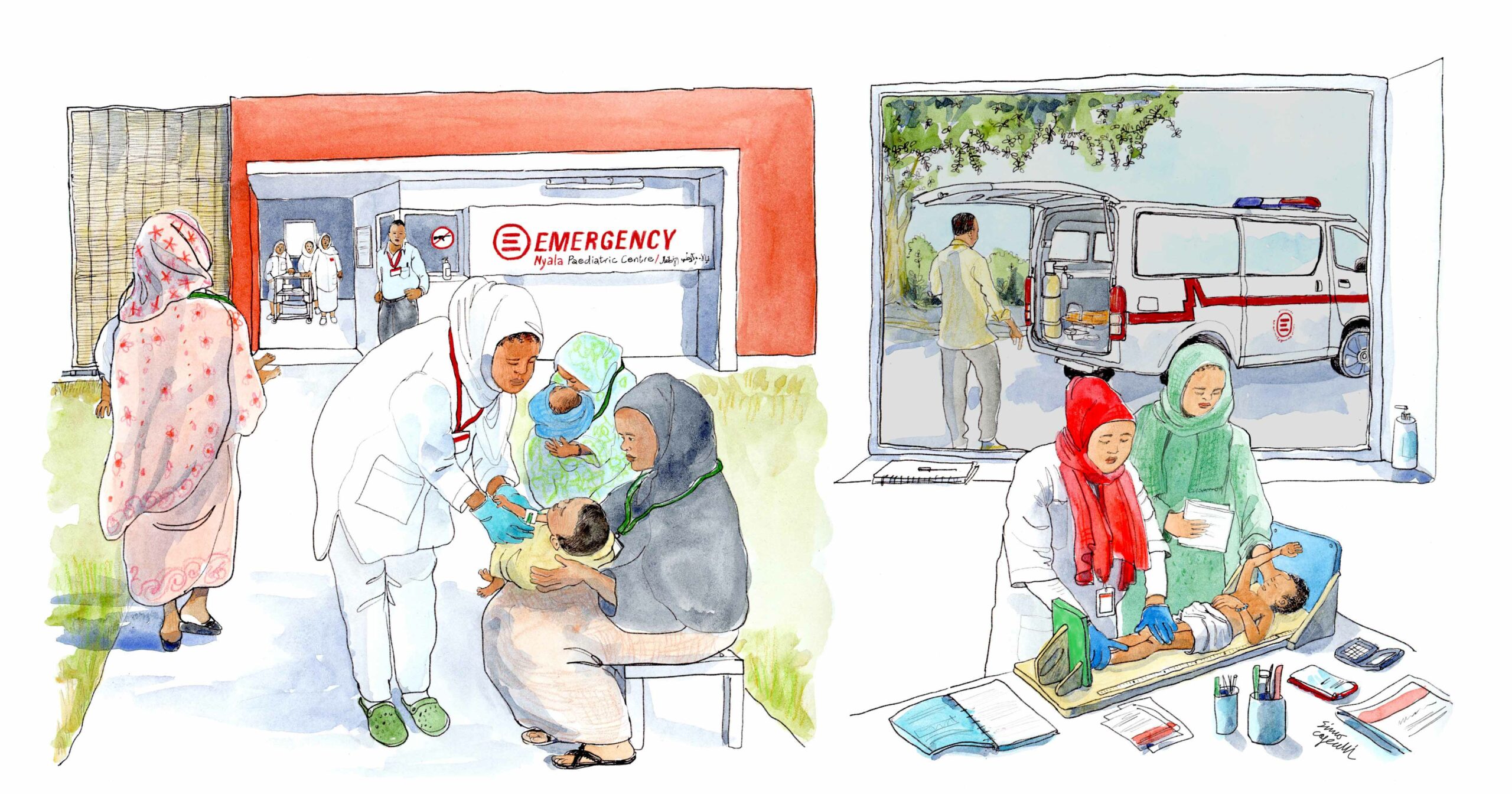
Emergency: needs immediate access to care and treatment. Severe impairment of vital functions.
Name: Waili
Age: 10 months
Origin: Al Hamidiya IDP camp, Zalingi, Central Darfur State
Diagnosis: Acute malnutrition and severe pneumonia.
Stabilise; take all necessary measures to prevent patient’s condition from worsening. In other words, do everything possible to keep him alive.
Upon his arrival to our Nyala Paediatric Centre, 10-month-old Waili shows worrying signs of severe acute malnutrition (SAM): emaciation, severe lack of energy, in need of prolonged care. His condition is so fragile that he cannot be given too many calories right away.
When our Paediatric Centre first began receiving children like Waili with SAM, our free ambulance service ensured their timely transfer to the few specialist centres that remained open. In the midst of a years-long conflict, the health system in Sudan has collapsed: more than 70% of health facilities are only partially functioning or entirely out of use.
To overcome the potentially life-threatening delays faced during referrals and guarantee immediate care, we began to assign some of our own inpatient beds to treat children with SAM and other serious conditions. Waili was immediately admitted to this dedicated stabilisation area, where our staff constantly monitor his health condition.
Step one: begin treatment with gentle rehydration, essential vitamins, antibiotics to fight pneumonia.
We tell Waili’s mother that her child needs a long, comprehensive course of treatment. Together with other patients and family members at the facility, they participate in our health information sessions on nutrition, hygiene and safe breastfeeding, preparing for the day Waili is eventually discharged.
The ‘Code Reds’ coming into our Paediatric Centre in Nyala are increasingly malnourished children, meaning their conditions are escalating to life-threatening severity. Poor access to food, safe drinking water, adequate shelter or essential services have a direct impact on their health and chances of survival.
“Since January 2025, around 40% of new patients in the 6-12 month age group have been severely or moderately malnourished, like Waili. That’s two out of every five children,” explains Nafisa, EMERGENCY’s Medical Coordinator at the Centre.
“If we analyse admissions during the same period, children under one year of age make up 35% of the total. We receive around 18 Code Reds every month, which means that approximately every other day, a child arrives in critical condition.”
Illustrated by Simonetta Capecchi
Simonetta Capecchi is an illustrator based in Naples who specializes in sketched reportages and illustrated maps.
She has published a monthly illustrated column in the Italian travel magazine DOVE since 2015. She also collaborates with the Archaeological Park of Pompeii and is responsible for the new illustrated map of the excavations.
Over the last 15 years, she has contributed to the global community of Urban Sketchers with workshops and reportage.
Her latest book is The Olive Trees of Capri. A story of heroic agriculture (Electa 2024).
EMERGENCY’s Nyala Paediatric Centre is co-funded by the European Union Civil Protection and Humanitarian Aid.

Latest updates
“It is right to be here”: Medical Coordinator Giorgio Monti on providing care in Gaza
Thursday, October 1, 2026
Ukraine | Our refurbishment of the Husarivka Clinic in Kharkiv, through the eyes of Liudmyla and Dmytro
Thursday, September 17, 2026