
Afghanistan | Beyond The Dust
Afghanistan: the remnants of an endless crisis
In Afghanistan, the humanitarian crisis has permeated every aspect of daily life.
Five years on from August 2021, the country continues to suffer as a deep economic collapse amplifies health needs. Poverty has reached extreme levels, depriving families of even the most basic means to survive.
In recent years, the gradual reopening of transport routes and lessening of travel restrictions have led to a significant increase in internal mobility, which was almost non-existent before 2021.
“The economic crisis has turned transportation into a trap: poverty forces people to rely on makeshift means to travel, along roads with no protection. Road traffic accidents, domestic injuries, and medical emergencies unrelated to war are worsened by inadequate infrastructure and extremely limited access to care, due to geographical, social, and economic barriers.”
While patients with violent injuries (from mines, firearms, or bladed weapons) continue to arrive at our hospitals – in part due to unresolved border tensions and explosions mainly occurring in densely populated urban areas – we are also addressing a layer of needs that has remained neglected for decades, overshadowed by the urgency of conflict-related trauma.
EMERGENCY’s work in Lashkar-Gah
Since the official cessation of hostilities, across the country – including in the Helmand region, once a hub of some of the fiercest battles of the past decades – we have adapted a nearly 30-year-long presence to the evolving health needs of the population.
EMERGENCY’s Surgical Centre in Lashkar-Gah, open since 2004, is a free, specialised facility for the treatment of complex trauma in the area.
In a region marked by instability, our doors have always remained open to provide free and high-quality care.
“For many Afghans, poverty is an insurmountable wall: travelling to a hospital is sometimes an unaffordable luxury. People wait, hoping the pain will pass, but meanwhile fractures heal incorrectly, infections spread through tissues, and head traumas worsen. What was once a treatable injury often becomes a permanent disability. We are here to restore health and dignity to those in need, with the sole aim of seeing people walk, work, and live again. We do not ask anything in return.”
Ahmad’s story
Ahmad is nine years old, living in a village on the outskirts of Lashkar-Gah.
Every morning, on his way to school, he crosses a dirt road. There are no pavements, no signage. Only gravel mixed with sand, deep potholes, and speeding vehicles raising thick clouds of dust.
In Afghanistan, the road network reflects decades of war: out of 21,000 kilometres of roads, only 7,000km are paved, according to the latest available reports.
One day, Ahmad never arrived at school.
A car had lost control on a damaged stretch of road, crossing into the opposite lane in a violent head-on collision. In the impact, one of the vehicles was thrown off the roadway and struck Ahmad on the roadside.
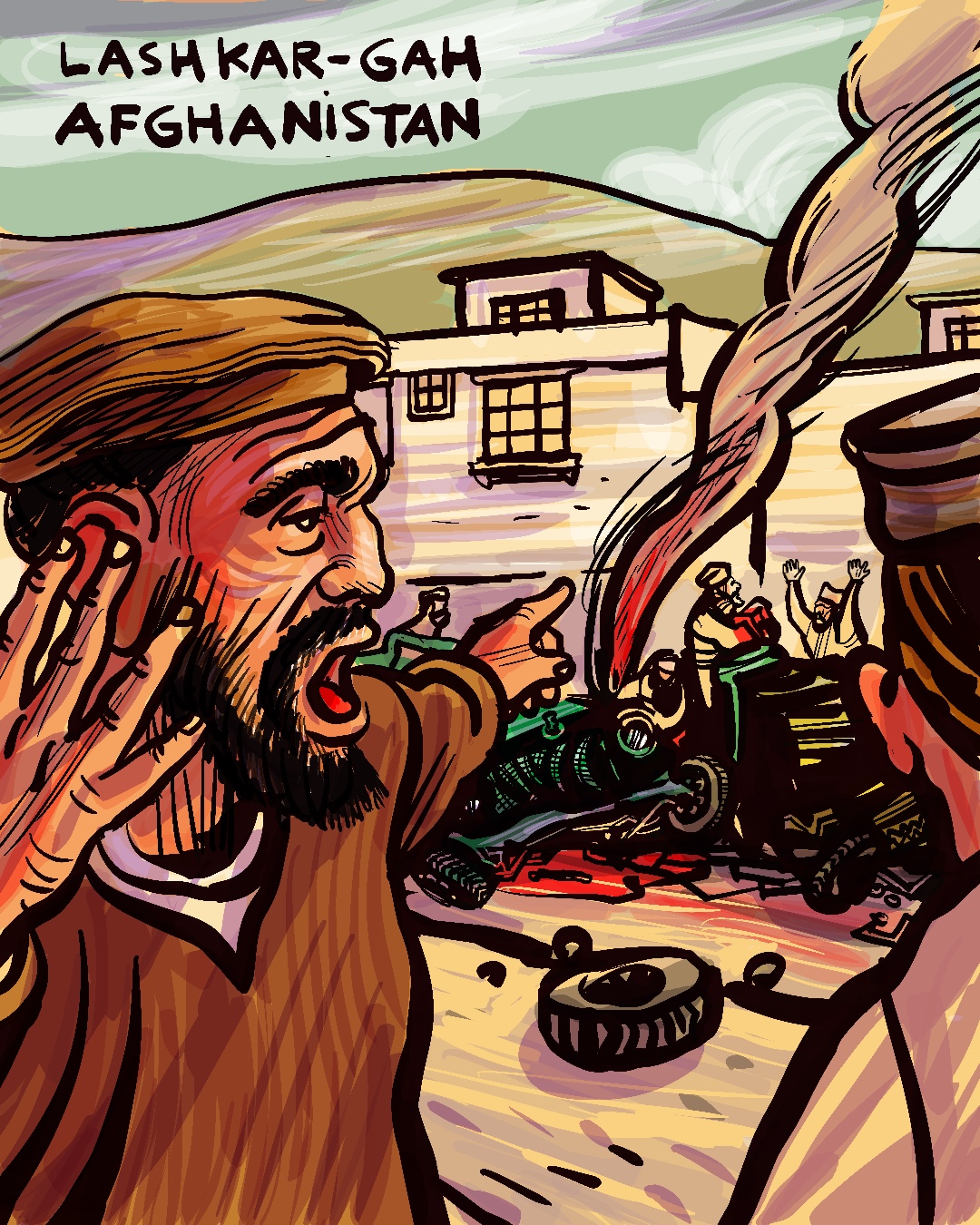
The driver’s braking was useless along the dusty Ring Road, the highway connecting the major cities of Herat, Helmand, Kandahar, and Kabul. A frenetic artery, the Ring Road is a compulsory route for anyone seeking to leave the isolation of rural villages: a constant stream of life in motion, where speed confronts the fragility of a road that has never stopped deteriorating, worn down by decades of military convoys and lack of maintenance.
“Travelling long distances on overcrowded buses and poorly maintained private vehicles, Afghans are frequently involved in mass casualty road accidents in Helmand province, often with fatal outcomes at the scene. In 2025, out of 4,632 admissions, 48.5% were due to road traffic injuries.”
Ahmad arrived at our emergency room unconscious, carried in his father’s arms, after neighbours had called him to the scene.
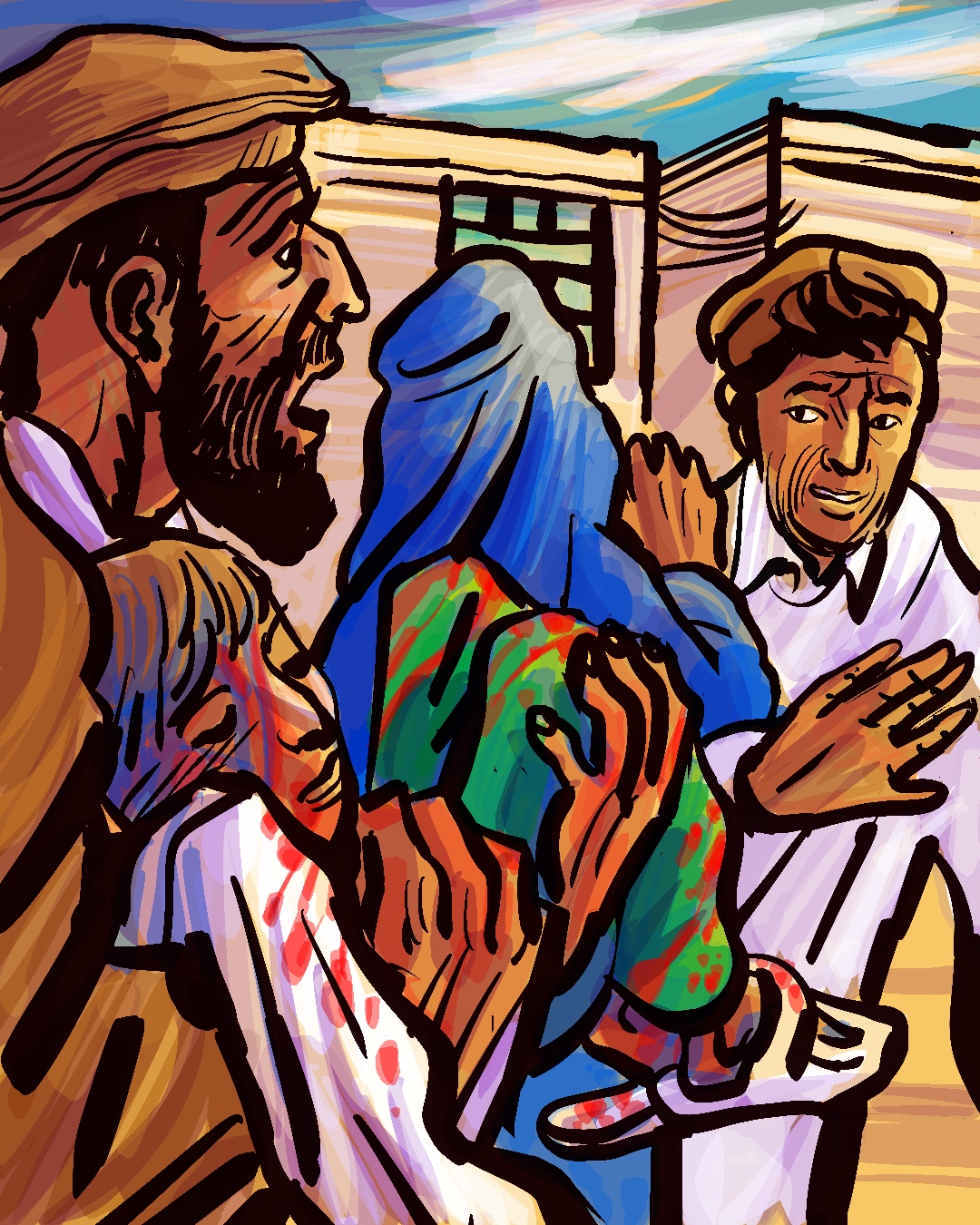
We immediately placed him on a stretcher and activated the ‘red code.’
His clinical condition was critical: a concussion, an open leg fracture, multiple deep abrasions still filled with road dust.
As the monitors began to display his vital signs, the full severity of the impact became visible under the emergency room lights.
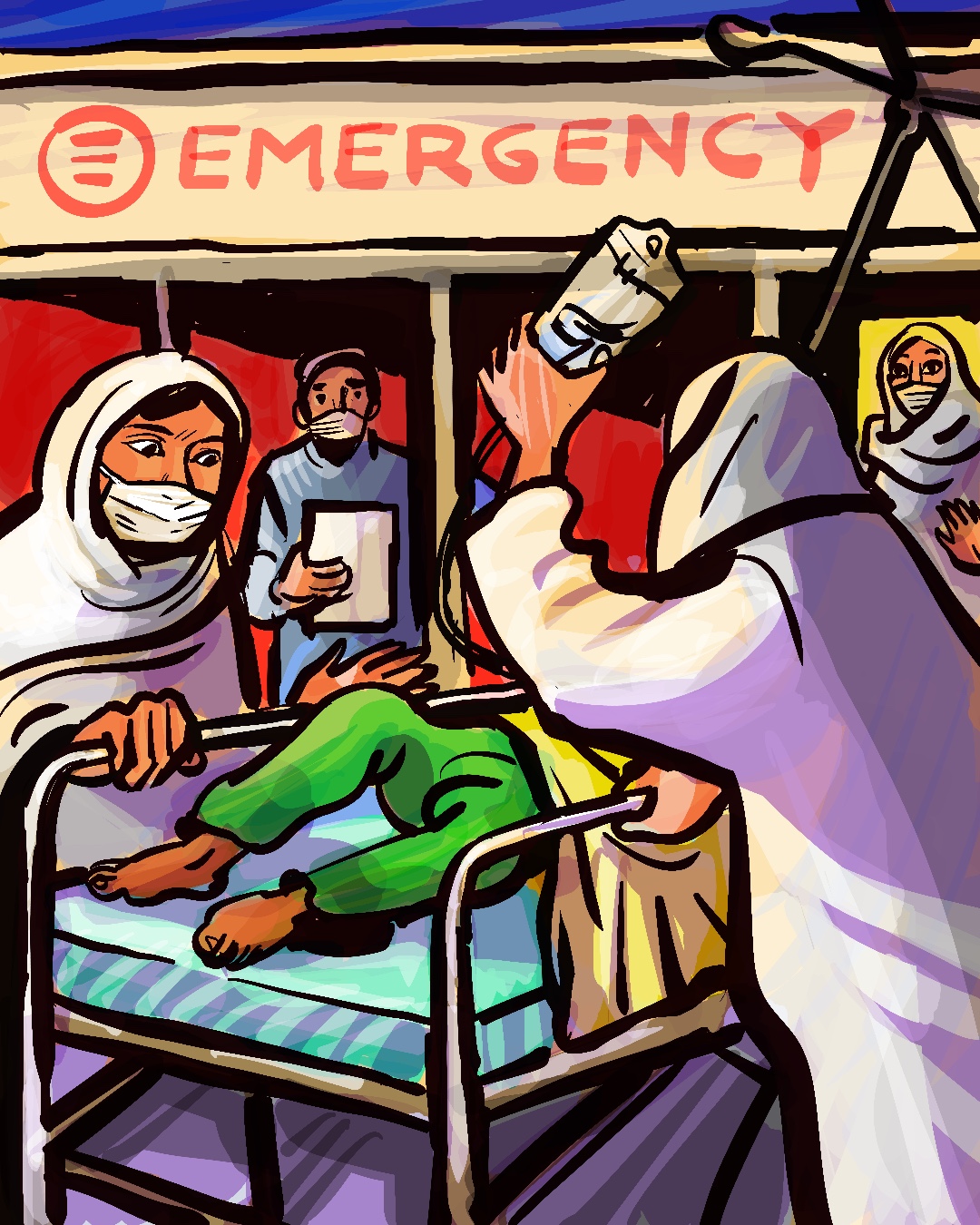
Less than an hour after arrival, Ahmad was in the operating theatre.
“We worked for hours to repair what the impact had destroyed. The first step was debridement: repeated cleaning of the wounds to remove every grain of dust, which in Afghanistan is one of the main causes of life-threatening infections. Then we treated the leg, stabilising the fracture with an external fixator, a metal frame needed to keep the bones aligned while the tissues recover from swelling.”
Ahmad’s recovery continued in our physiotherapy unit.
At first, his face showed only silent resignation, the gaze of someone whose world has collapsed in an instant. Every movement carried the frustration of not being able to stand, and tears came quickly during exercises that felt like insurmountable obstacles.
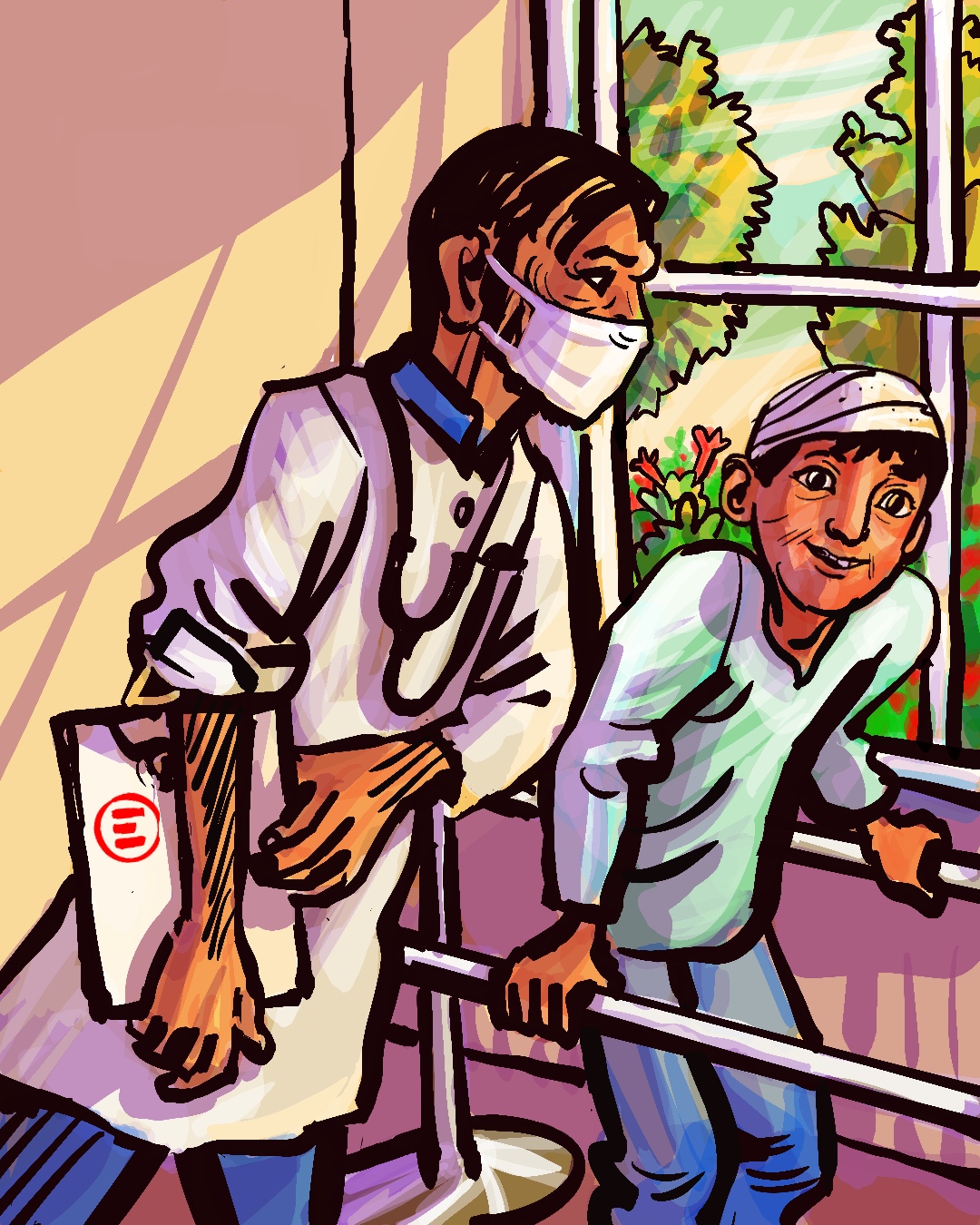
Yet, day after day, step after step, his gait became steadier and more confident.
“In many facilities, care stops right after surgery: once discharged, patients are often left alone, condemned to a wheelchair or crutches due to lack of resources and support. We believe true healing only happens when autonomy is regained. That is why physiotherapy is central: it is the bridge between the hospital bed and the first step outside our gates. Continuous support that extends beyond discharge, ensuring no one is left alone at the most difficult moment: the return to everyday life.”
On his last day in hospital, Ahmad walked the entire corridor by himself, supported only by a crutch.
Beyond the threshold of the hospital garden, breathing in the open air, his father and sister were waiting for him.
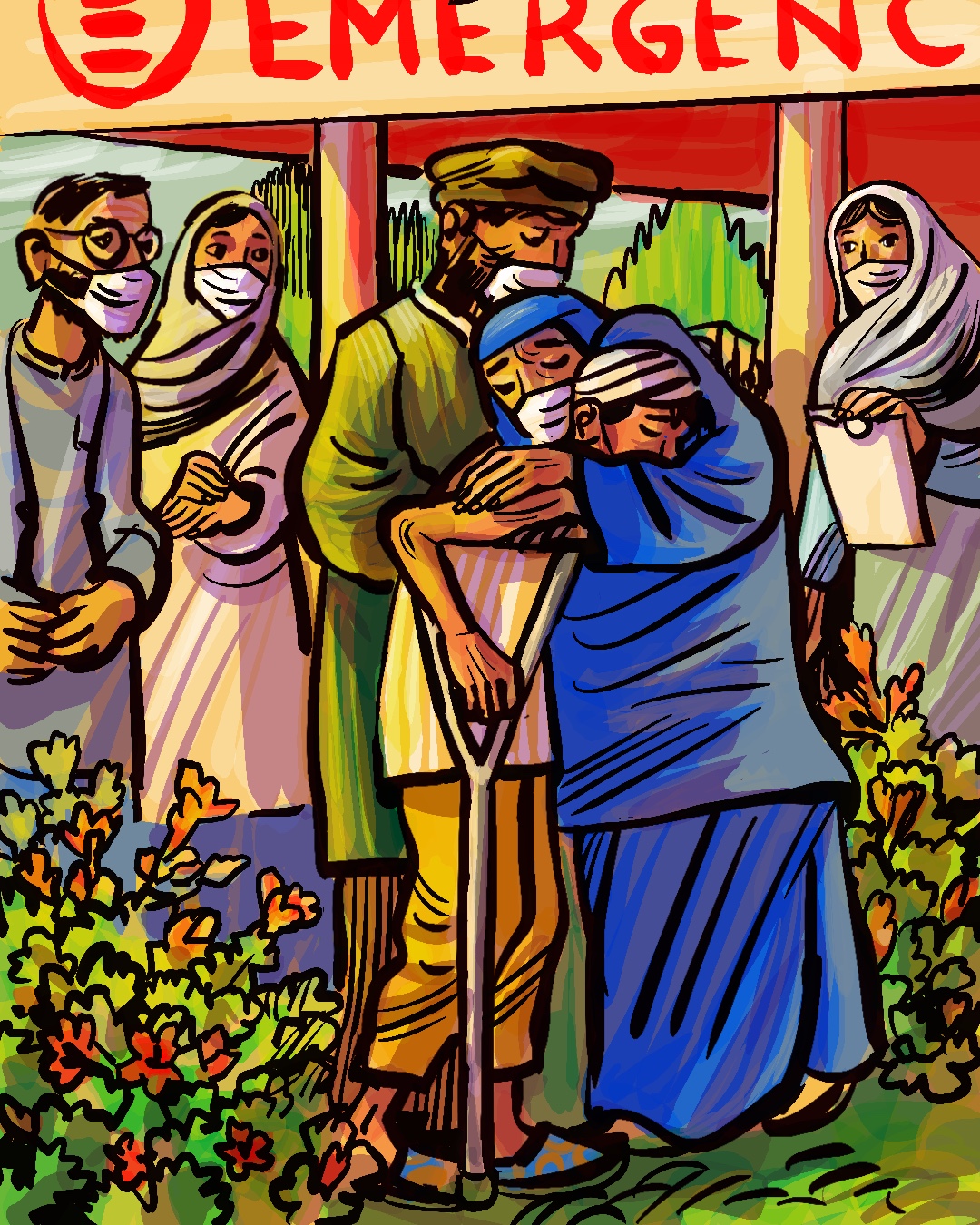
“A well-kept garden, natural light, and an open horizon are not ‘accessories’ but essential therapeutic tools. In contexts where trauma is often linked to hostile, closed, dusty, or destroyed environments, offering the beauty of a green space allows patients to experience recovery in an oasis that restores dignity and respect.”
We cannot abandon Afghanistan.
Illustrations by Marco Paci
Since 1997, he has worked as a freelance illustrator and cartoonist for publishers, organisations and institutions in Italy and France. His books have received various awards, such as the 2017 Andersen Prize, the 2019 Rodari Prize and the 2020 Procida Prize, and have been selected for the White Ravens list at the Frankfurt Book Fair. He wrote and illustrated La secchia rapita o dell’insensatezza della guerra (Minerva, 2022) and Il peso delle pietre, a graphic novel about political deportation (BeccoGiallo, 2026). Since 2004, he has also been active in theatre, combining illustration with the performing arts. He tells stories of migration, speaking out against war and discrimination, and imagining a better world.
The Italian Agency for Development Cooperation
The project is part of the Emergency Initiative in support of life-saving activities at EMERGENCY’s Lashkar-Gah Surgical Centre, funded from 31 May 2024 to 20 June 2027 by the Italian Agency for Development Cooperation – AICS Islamabad with a grant of €3,197,813.
Latest updates
“It is right to be here”: Medical Coordinator Giorgio Monti on providing care in Gaza
Thursday, October 1, 2026
Ukraine | Our refurbishment of the Husarivka Clinic in Kharkiv, through the eyes of Liudmyla and Dmytro
Thursday, September 17, 2026