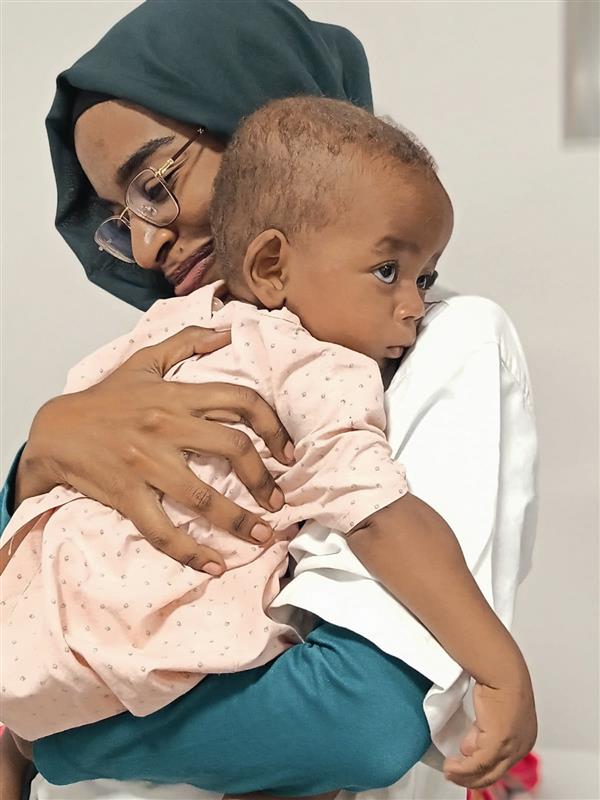
Over 1,000 Days of War in Sudan: ‘Every day I see the consequences.’
The war in Sudan has raged for more than 1,000 days.
The fighting continues to devastate the country, but its consequences rarely make international headlines.
Yet millions of people remain victims of a humanitarian emergency that numbers alone cannot truly quantify.
We received this testimony from Fadwa Ibrahim, an EMERGENCY paediatrician in Khartoum. Her plea: “Don’t forget Sudan.”
“I am a paediatrician and every day I continue to see the consequences of this war on people.
Around 100 children arrive every day at EMERGENCY’s Paediatric Clinic in Khartoum, a city that is repopulating after months of destruction.
Ensuring continuity of care even in the midst of war is my act of resistance, for my people and my country.
Since last August, we have stepped up our activities, opening a ward for acute cases that need stabilisation and for chronic conditions.
And while we are discharging and admitting patients non-stop, we still decorate the rooms and make them welcoming, so that these walls can keep the children and their mothers company.
We want them to forget about the war during their hospital stay, and for those born after 15 April 2023 to experience a different reality.
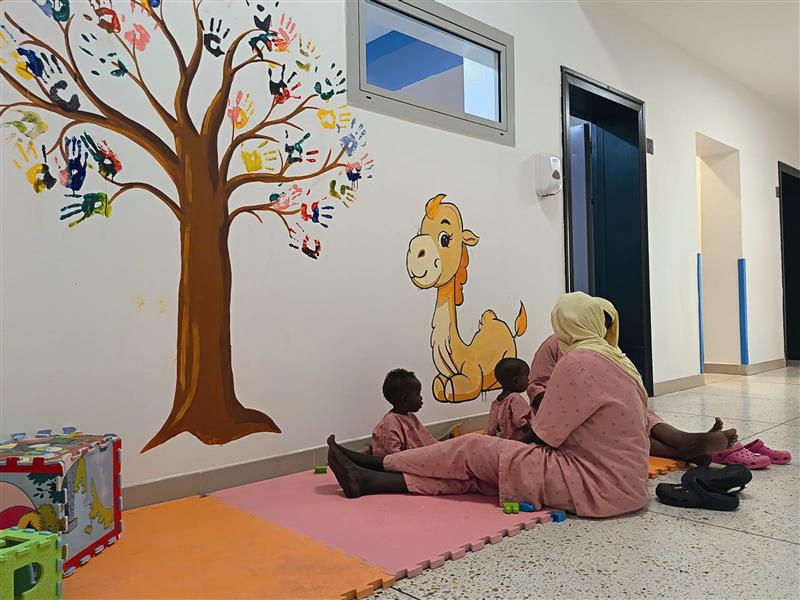
We treat malnourished children who arrive in serious conditions. A few months ago, we launched a programme to stabilise acute cases and monitor their recovery with a monthly plan.
Every week, 40 new children are placed on an intensive nutritional programme to help them overcome the most critical phase of Severe Acute Malnutrition (SAM) to reach Moderate Acute Malnutrition (MAM), which opens the way to the next stages of recovery.
We then follow up with them in the clinic for regular monitoring.
A few weeks ago, eight-month-old Miriam arrived: she was severely malnourished, dehydrated and couldn’t even hold her head up. I feared she would die, but with continuous treatment in hospital she began to gain weight. Now, she is responsive and can even sit up.
Mothers are also often malnourished because they do not have the financial resources to ensure a healthy diet for themselves or their children.
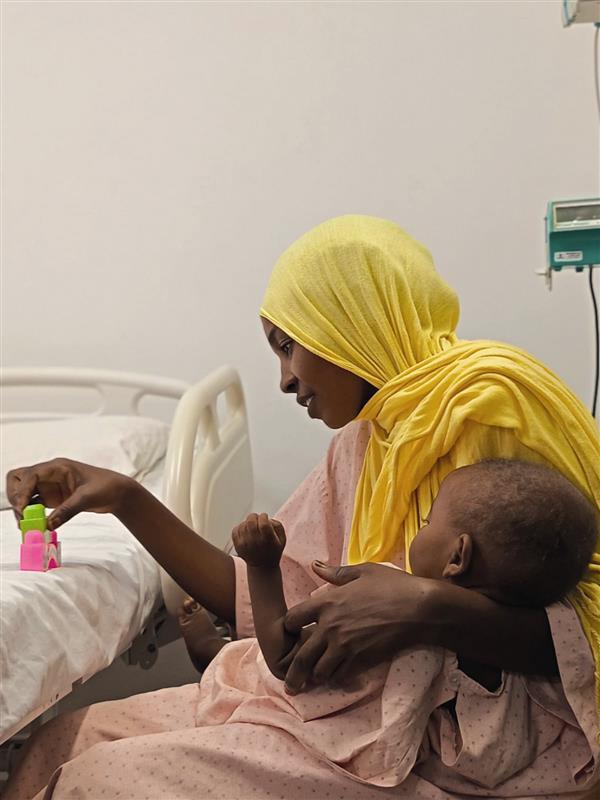
Our health promoters always find the right words to engage them in nutrition education sessions and suggest meals that are compatible with what they have available.
War brings the fear of disappearing, but it also brings the fear of not being seen: it is the distance, spanning almost three years, that has not been bridged between those who die or survive in silence, and a world that stands by and watches with indifference.
Do not forget Sudan.”
— Fadwa Ibrahim, EMERGENCY paediatrician in Khartoum, Sudan